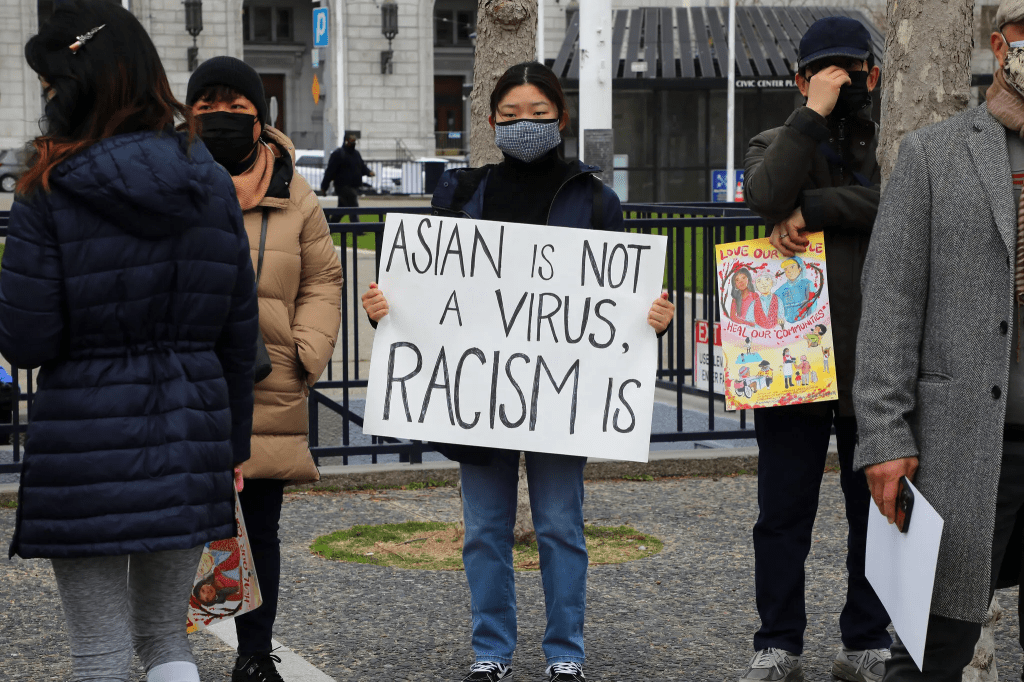
The comic book, “They Called Us Enemy” by George Takei, shows us his childhood and what he experienced as a kid imprisoned in an internment camp during World War II. Through the comic book, he tells us the injustices he and his family experienced in internment camps. The comic book has similar connections to recent years. In the last years, there has been a rise of hate crimes against Asian Americans due to Covid. Many Asian Americans have been verbally harassed and physically assaulted, which is causing a lot of fear in Asian communities around the world. Not only does “They Called Us Enemy” serve as a reminder to the past, it also serves as a reminder to the wrongdoings of many races and ethnicities in the past.
“They Called Us Enemy” by George Takei reminded me about the podcast by Scott McCloud about comic books. In the podcast, he talks about how comic books can be used as another way to tell a story or express ideas. In the podcast, he talks about how the drawings in the inside of comic books are different from books because they can express emotions in a way that normal books can’t. Another thing that comic books can do that normal books can’t is expressing ideas without even saying a single word using emotion on the faces of characters and what they are doing in certain panels.
In conclusion, “They Called Us Enemy” and Scott McCloud’s podcast both show how comic books can express emotions and ideas that plain old books can’t. The visual aspect of comic books are able to help people better understand what many writers are trying to say and shed light on. Comic books are able to push the boundaries of storytelling and have the potential to inspire many people to express their emotions and thoughts through comic books.
 Write Our World