Reading, They Called Us Enemy by George Takei felt like peeling an onion. The first layer of the onion, the surface appears to be somewhat “normal.” The more you peel an onion, another layer will be revealed. Each layer becoming harder to peel since the tears are threatening to swell up. They called us enemy takes the reader back to the past, to World War II, back when the Pearl harbor bombing had just happened. Where Japanese are forcefully victimed to discrimination, racism, and hatred from the country they had been born and raised in. Where even their own president betrayed them, issuing an executive order that legalized the internment of Japanese Americans. The more you read the story, the more you peel the onion, each layer increasingly filled with hatred, resentment, and suspicion. This arose the question I wanted an answer to: How rotten can the onion layers get the more you strip the surface?
Following the timeline of World War II, President Franklin Roosevelt would legalize the evacuation of individuals with Japanese origin into camps. Americans were quick to abandon the Japanese americans, lock their bank accounts, limit their freedom, and made them face humiliation beyond belief. Japanese-Americans who had a house, a stable job, and a place to call home had it all snatched away in a blink of an eye. Japanese-Americans were discriminated againist and walked on thin ice even if they didn’t do anything. This was barely the start of peeling the onion, and we are already seeing signs of decay and mold.
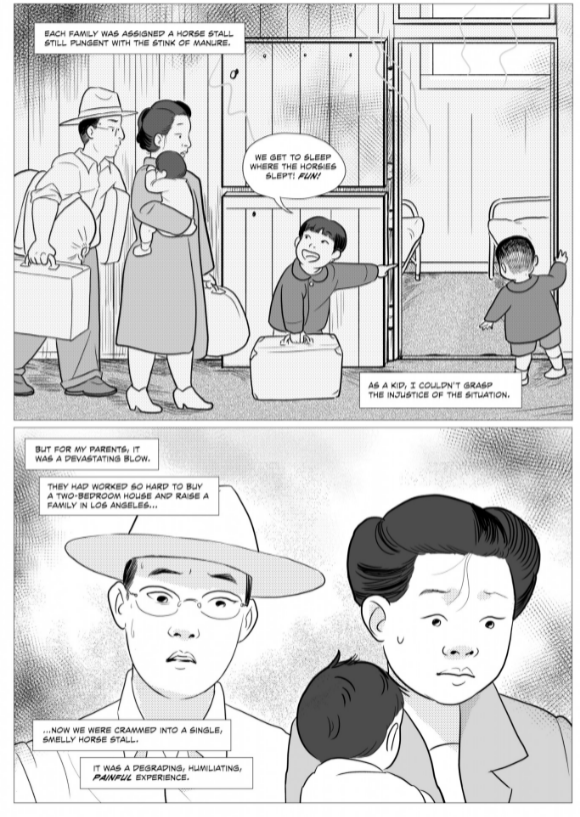
In the panel, the “onion” that we have readers have been “peeling” will show its full rottenness. How Japanese-Americans have been facing discrimination simply just because of their origin, and how they don’t stop to think if they have gone too far. I am confident that going to a house in LA to a horse stall still fresh with dung from horses would have been the most humiliating thing you could experience. Unfortunately, this was a shared experience between Japanese Americans at this time, who were treated no different than prisoners. George’s family were loyal to America and had built a home in America, and without any proof, they had been taken to camps. This action was done without any trial, nor any attempt to prove the innocence of the Japanese-americans. With just a word from the American government, the Japanese would have their lives impacted for years to come.
In the graphic novel, it is displayed that Japanese Americans would be forced to live in very hot homes, have bland food served to them, having to live inside fences, and even being given the decision whether or not to give up their citizenship with the Renunciation Act. After all this tragedy and shame, the Japanese would return to the cities unsure if they are even welcomed anymore and having nothing to their name. The Japanese would have to start from the beginning all over again.
The principle of rottenness that can only be shown the more you can peel is shown in the manhwa, I didn’t mean to attract the male lead. The manhwa is about how a girl had reincarnated into the baroness, Eleanor who had worked up her reputation to become a decent figure in the social circle as a noble. Eleanor is the female lead in the story who is getting in the way of the imperial princess’s love for the son of the duke, Leon Calabria who is the male lead of the manhwa. The imperial princess, Irene Hascathor is like the surface of the onion. On the outside she appears to be an angel, she is kind, gracious, merciful, and the embodiment of what an imperial princess should be.
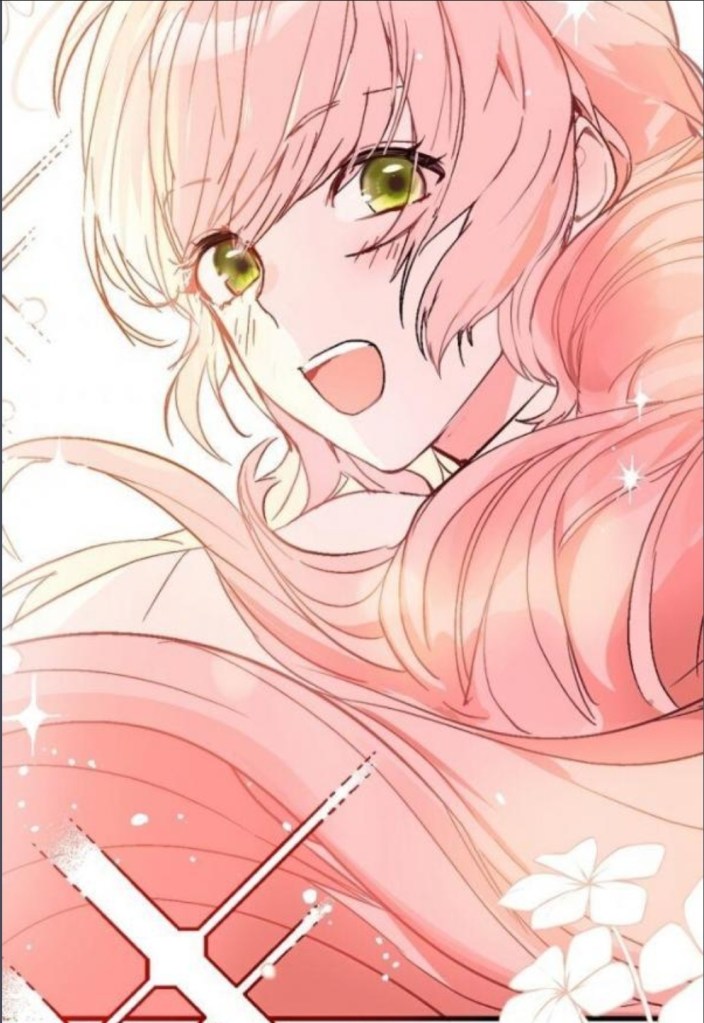
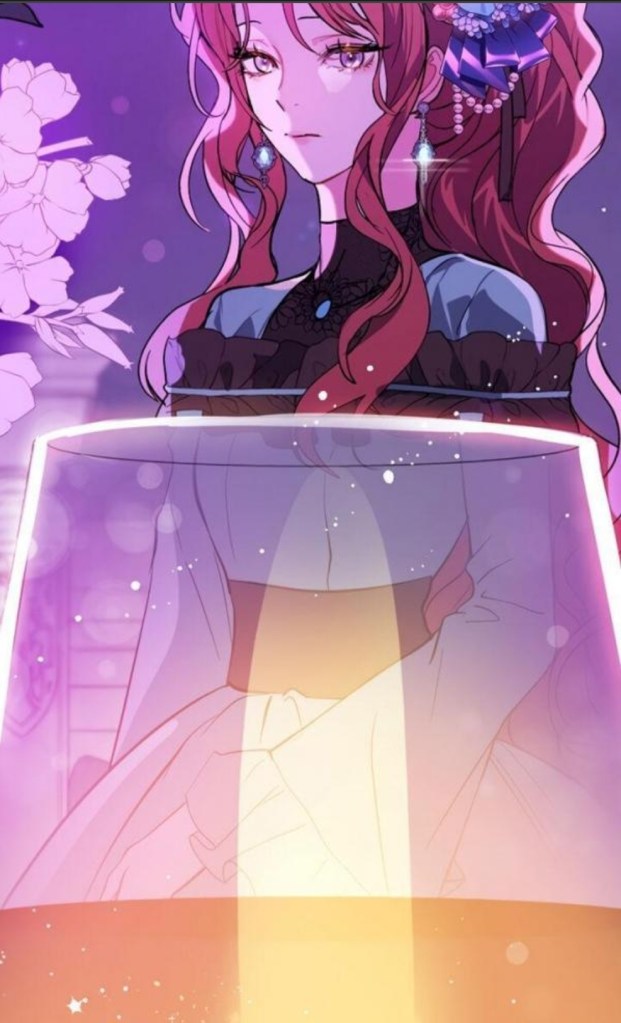
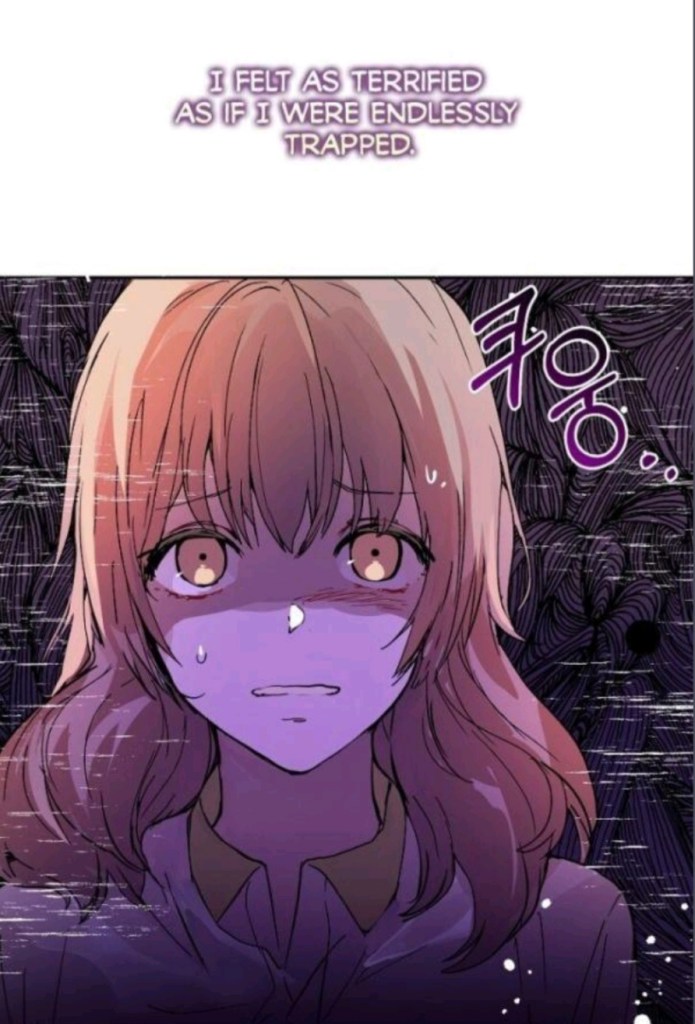
However, as a reader, the deeper you get into the story, you realize that the “angel” Irene Hascathor is all a facade. Her true self is manipulative as she uses people who are a lower rank than her to carry out her dirty plots. In the story, Irene uses Biancasta to make fun of Eleanor and even tries to get her killed by poisoning her wine glass to remove any obstacles of her love for Leon Calabria. Irene Hascathor is manipulative, cunning, sly, and is not afraid for blood to spill in order to get her end goal. She made Biancasta feel threatened and trapped, but others just saw it as Irene Hascathor being merciful. Irene’s methods don’t just end there, originally to have Leon Calabria she had intended to make him fall asleep with a sleeping pill and sleep in the same room as him. So when Leon Calabria would wake up, he would have this “sense of duty” to get married to Irene Hascathor. The readers of this manhwa can easily see how immoral Irene Hascathor and how “putrid she as an onion.”
Both of these graphic works display the characteristics of peeling an onion, and how both put on facades to justify their reasonings. In They Called Us Enemy, the american government, on the surface it seems like all the laws legalizing japanese camps are for the greater good. However, in reality, the Americans are scared and push all their fears onto the Japanese who face all the consequences. The same underlying idea is seen in the manhwa, I didn’t mean to attract the male lead, where the imperial princess keeps a mask of an angel up. Both works display the truth as you continue to read the story, and at the same time stripping the onion of its concealing exterior to reveal the mold.
 Write Our World