As babies turn into toddlers, and toddlers turns into children, and the children turns into teenagers, and the teenagers turns into adults, we can notice a transformation in the mind. One can say that a child’s mind is a sponge, filled with holes to be crammed with knowledge. Another may assert that a child’s mind is like a new computer, learning how to process and organize information. Those can be acceptable analysis of a child’s mind, however those interpretations disregards an important factor to childhood. A sponge can only hold so much water and a computer can only store so much information. A child’s mind is limitless. There is no limit to the child’s creativity, imagination, determination, and the abilities to think, reason, and learn. So, what is a child’s mind? The graphic novel They Called Us Enemy may touch on the surface of what is the mind of the child. As well as the podcast “Play Mountain” may help you comprehend the child’s mind and what it may be.

The graphic novel They Called Us Enemy, written by George Takei, takes the author’s real time perspective of the persecuting of Japanese Americans during World War II. As tension was rising between the Americans and the Japanese after the Pearl Harbor bombing, the Japanese and even other racial minorities were transported in “Relocation Centers”. According to the author’s story, the camps were in a poor conditions which was comparable to that of a horse stall. However, since the author was a child during World War II, he took lightly to the situation. In fact, there are times when the child’s mind come into play during different scenarios. Takei, was in fact glad when he slept “where the horses slept”. Takei attempted to touch a sentries weapon for fun and curiosity, as well as experimented socially with the guards for the sake of fun. Now, how does this relate to the topic? The child’s mind portrayed in the graphic novel is naive, yet is able to take joy and curiosity to any situation in any place. Thus, the child’s mind is definitely fluid. It doesn’t have a shape. Not until rules and expectations come into action, at least.
Moving on, the podcast “Play Mountain” focuses on the idea of “play”. Isamu Noguchi was a playground designer, who believed abstract art was most creative way to introduce the real “play” to children. But what is the “play”? In the mind of Isamu Noguchi, “play” is where one should experience the environment the way man first experienced the earth, as a spectacular and complex place. Not to be using playgrounds like a military exercise equipment. This was where the abstract art comes in, it doesn’t have a specific function. Yet, can work wonders with the children. The children are able to interpret and “play” without limitations. Anything would have been possible for the children if it weren’t for the injury risk. Now, how does this relate to the topic? The idea of “Play Mountain” also revolves around the limitless ideas of the child mind. Abstract art, was the answer for the playground Isamu Noguchi used for finding out what can really make a child experience “play”. Which in turn, can be used for our answer.
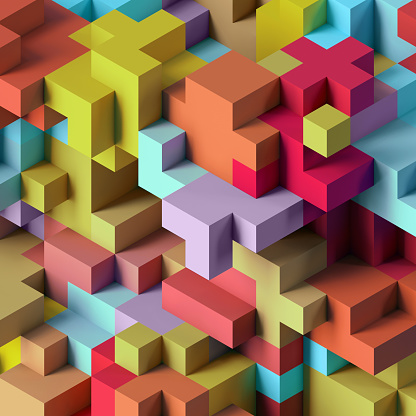
A child’s mind can be seen as an abstract art. No adult can understand, but everyone can interpret differently. Abstract art is all complex and strange, yet is available to limitless possibilities, just like the child’s mind. This is why the child can take many shapes and find fun wherever, no matter the situation. This is why the child works so well with abstract art itself, no matter what it is. Abstract art is something we adults can’t understand without lack of experience and it is also something that can be designed anyway the artist wants it to be. Just like the child mind. Naive, yet free.
 Write Our World