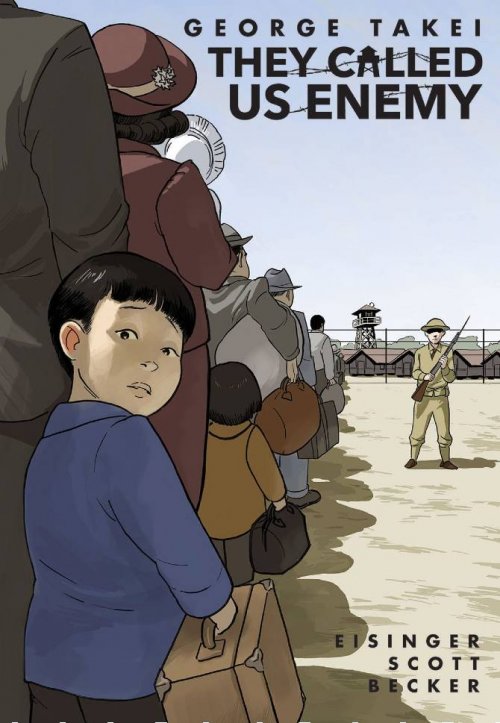
When reading They Called Us Enemy by George Takei and listening to The Play Mountain podcast, my perspective and view on the Japanese internment camps was altered completely. During World War II my Japanese American ancestors were sent to incarceration camps scattered across the west coast. Tule Lake. Manzanar. Minedoka. All three camps held them, prisoners, in their own country. Growing up, I’d only heard of the shame, misfortune, and pain that it brought to my family and thousands of other Japanese Americans. My grandfather was and is an active member of the Japanese American Citizens League and fought for reparations for our community. I grew up in this makeshift family of Japanese Americans, all of which had this overarching shared experience and trauma. Whenever someone mentioned “camp” the only things I associated with them were loss and hardship. However, both the graphic novel and podcast provided an interesting and new perspective on my perception of the camps.
George Takei’s graphic novel actually gave the internment camps a little bit of humanity and depth. Up until that point, I’d only heard of the “typical” experiences and stories that you hear in most textbooks describing the horrid conditions and environment of the internment camps. However, in George Takei’s They Called Us Enemy his camp experience was much happier than these stories and was even filled with fond memories. Somehow this possibility had not even crossed my mind. It became heartwarming to see how they had created their own families and communities in a time of such suffering. Takei even describes the camps as a place of safety for many once the war ended. The outside world was filled with uncertainty and the camps were now the closest many had to a home. In a sense, the graphic novel had given the camps a new meaning and duality in my mind.
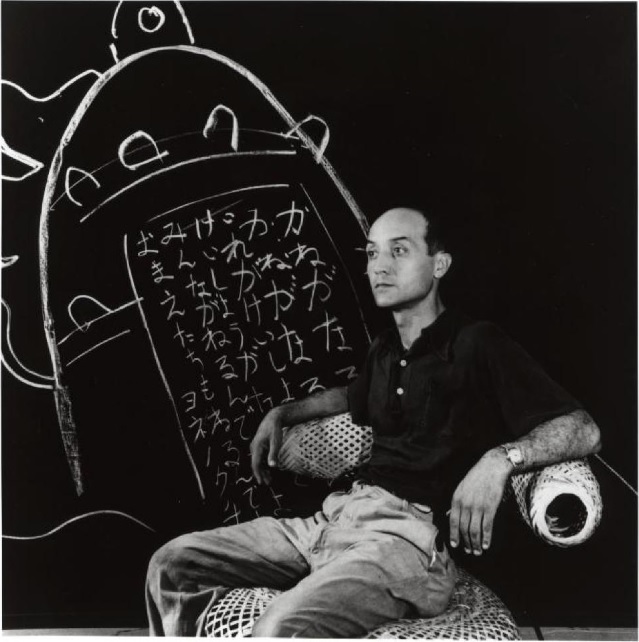
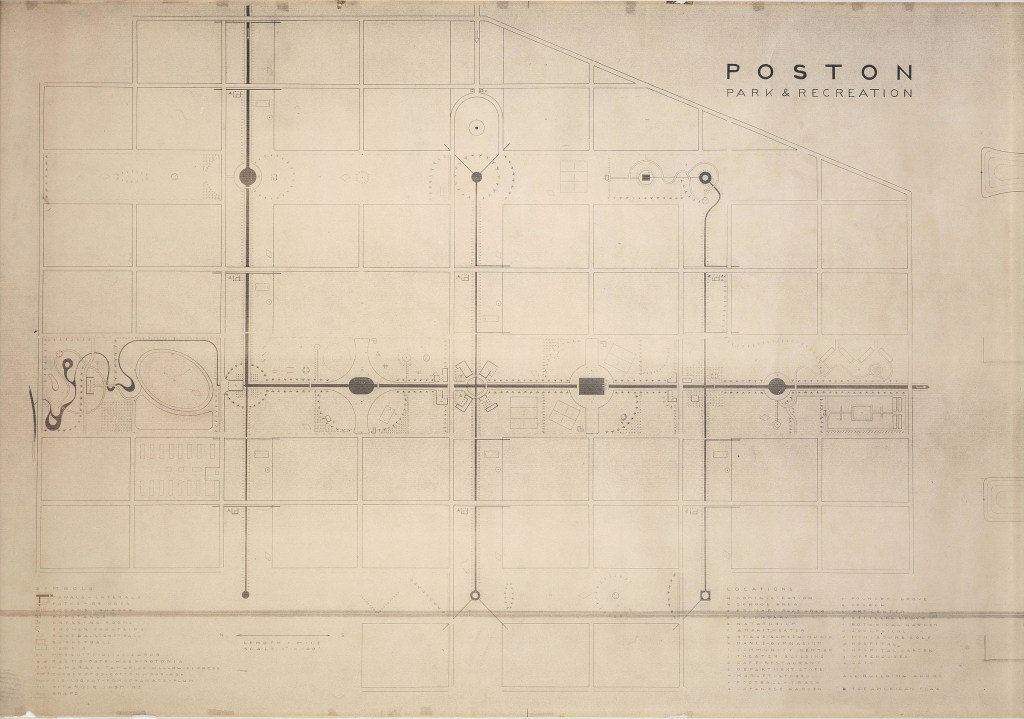
In The Play Mountain podcast, Isamu Noguchi originally dreamed up a modern and conventional design for the internment camps. At the time, he had no awareness or real idea of the gravity of the construction of the camps and what it really meant. At first, Noguchi didn’t perceive them to be prisons and saw them more as new apartment complexes or community housing. It wasn’t until Noguchi was actually in the camps that he realized the government had no plan to improve their living conditions. Noguchi himself was a Japanese American and he couldn’t fully imagine or know the real impact Pearl Harbor and Executive 9066 had. This led me to wonder how many people really knew about the internment camps in the United States at the time. On the east coast, were there people who had no idea of their existence? It blew my mind to think that on one side of the country, the camps may have been mere whispers or rumors. Meanwhile, on the other, it was the terrifying reality that some woke up to every day.
My perspective was completely changed knowing that there was a huge of lack of awareness at the time. Now, the internment is seen as a huge event of devastating significance. But at the time, many did not understand what the camps really were or where the Japanese Americans actually went. Many even thought that they simply “disappeared.” In comparison, the world of Japanese Americans was completely turned upside down as they were forced to adapt and create an entirely new lifestyle. Yet, they still found comfort and safety in these conditions. Strangers were turned into family. Empty barracks turned into homes. Children grew into teenagers and young adults. These two resources go to show how there is always more to what’s written in textbooks.
 Write Our World