You look back. We look back. The playgrounds of the past are so different, so various in shapes, sizes, and play equipment that no one is like the other. So, what happened? While listening to the 99% Invisible podcast I asked this same question. Why had we as a populace suppressed the idea of new and exciting playgrounds and replaced them with the boring same old playground that we have today? Well, in short, the playgrounds were dangerous. Multiple cases of children being injured as they fell off of too-tall playground equipment were brought to the front of parents’ minds when given the option that the new U.S CPSC (Consumer Product Safety Commission) gave to them. Make playgrounds safer but make them more boring. Nowadays the CPSC’s playground safety guide is so cut and dry that to even try to diverge and make a more fun park would be harder to do than trying to get a 100% on a final that you did not study for. Now that does not mean people did not try to go in and change the cookie-cutter playground shape. Set stage for Isamu Noguchi. Noguchi had an idea. He had already become a sculptor but he wanted children to grow up in an environment where they could learn to be creative. How does that translate into sculpture? This.
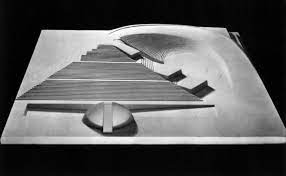
This is Play Mountain. Play Mountain is a giant sculpture/ playground concept that is built so that the children have no actual direction for play. It is up to the viewer (the child playing) to decide what to do. This was a stroke of genius for Noguchi and looking back on it many say that this work is impressively thought out. Although it never came to fruition because of its lack of the “main” necessities of a playground. Where were the seesaws and the swings? There was no way a child would have fun playing on this. What made it so much worse was the arrival of WWII and the internment of Japanese individuals. Despite this, he carried on and eventually was able to create a “play mountain” in Sapporo, Japan.
As we push our ideals of safety and perfect playgrounds on our children we also push the idea that the limit has been reached. There is nothing more to do because perfection (the playgrounds model) has been reached. Why innovate when that perfection can not be replicated? We are creating new generations that are less creative than those generations before us. If we don’t allow innovation in these new playgrounds then the newer generations will fall into the same cookie-cutter behavior as those before them. Grow up in a cookie-cutter world and you become a cookie-cutter person. Perfect but not different. Let’s break that chain. Let’s become something different from what the world expects us to be.
 Write Our World