All Quiet on the Western Front by Erich Maria Remarque offers a harrowing depiction of the brutal realities of war through the eyes of young German soldiers during World War I. Within the narrative, the character of Himmelstoss, a former postman turned drill instructor, serves as an intriguing subject for the application of Socratic philosophy to evaluate his ethics. This essay aims to explore the ethical dimensions of Himmelstoss’ actions and behaviors, employing Socratic principles to critically analyze his role in the novel.
Socrates emphasized the pursuit of virtue and the cultivation of wisdom as the key components of a good life. In All Quiet on the Western Front, Himmelstoss exemplifies the opposite of these virtues, displaying authoritarianism, cruelty, and a lack of empathy towards the soldiers he trains. “His drill is so sadistic that some of the lads are beginning to crack up. One man ran off into the night, weeping and sobbing; they caught him and sent him to the insane asylum” (Chapter 3). This quote exemplifies the detrimental impact of Himmelstoss’ abusive behavior on the soldiers’ mental health, emphasizing the ethical ramifications of his actions. Socrates believed that knowledge of good and evil would lead individuals to act in accordance with what is right. By contrast, Himmelstoss abuses his power, humiliating and mistreating the soldiers under his command.
Socartes is known for his Socratic method model. This is where people are engaging in dialogue and questioning to prompt self-examination and critical thinking. Through this lens, Himmelstoss’ lack of introspection becomes evident. He unquestioningly adheres to the oppressive militaristic system and fails to reflect on the consequences of his actions. For instance, when Himmelstoss initiates a brutal exercise by kicking the protagonist, Paul Baumer, in the ribs, he does so without considering the physical and emotional harm he inflicts.
One of socrates main thoughts was how he argued that individuals should adhere to a sense of justice and assume moral responsibility for their actions. Himmelstoss, however, exhibits a distorted sense of justice, believing that his authority entitles him to treat the soldiers as subordinates. “He took it upon himself to get the ragtag bunch into shape. And God knows he gave us the works. He crammed it into us with a brutality that swept us off our feet” (Chapter 3). This quote demonstrates Himmelstoss’ harsh and brutal training methods, emphasizing his cruelty and lack of empathy towards the soldiers under his command. This is exemplified when he punishes Paul and his comrades for minor infractions, such as having dirty boots, by making them perform menial tasks under his command. Himmelstoss fails to recognize the inherent dignity and worth of each soldier, treating them merely as pawns in a hierarchical structure. When the men are in midst of battle, he notice Himmelstoss cowarding in a dugout. This shows that Himmelstoss isn’t a true soldier and only knows how to enforce discipline and pain.
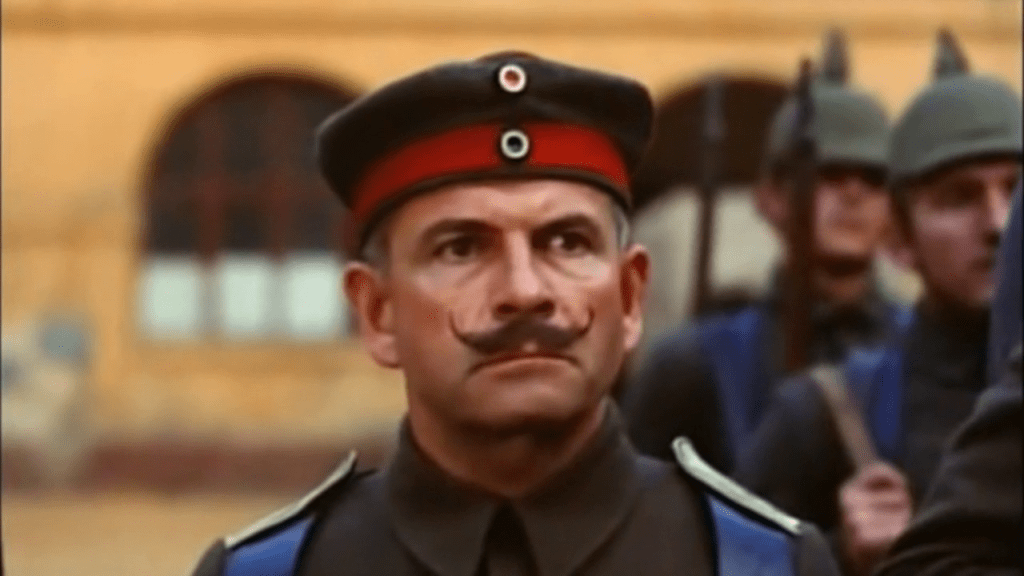
The ultimate goal of human existence is the pursuit of wisdom. Socrates argued that true wisdom comes from recognizing one’s own ignorance. In contrast, Himmelstoss exudes arrogance and a misplaced sense of superiority. “Himmelstoss sneaks up on Tjaden from behind and hits him over the head with a stick. We collapse in laughter. There is something about Himmelstoss that makes him fair game” (Chapter 3). This quote illustrates the soldiers’ collective disdain for Himmelstoss, implying that his treatment of others has earned him their mockery and lack of respect. He does not engage in introspection or seek knowledge beyond his narrow military training. Himmelstoss is blind to the horrors of war and fails to comprehend the devastating impact it has on the soldiers. This lack of wisdom prevents him from understanding the true nature of his actions and their consequences.
Applying Socratic philosophy to evaluate Himmelstoss’ ethics in All Quiet on the Western Front reveals a stark contrast between his behavior and the ideals espoused by Socrates. Himmelstoss embodies the antithesis of Socratic virtues, displaying authoritarianism, lack of self-reflection, distorted sense of justice, and a lack of wisdom. Through Socrates’ teachings, we come to understand the profound ethical implications of Himmelstoss’ actions on the soldiers under his command. Remarque’s portrayal of Himmelstoss serves as a powerful critique of the dehumanizing effects of war and the corrosive nature of unchecked power.
 Write Our World