The philosophy of Niccolo Machiavelli, as outlined in The Prince, evaluates the ethics of Himmelstoss, a soldier in Erich Maria Remarque’s All Quiet on the Western Front, as an individual who embodies Machiavellian principles. Machiavelli’s emphasis on the attainment and maintenance of power through deception, fear, and force is evident in Himmelstoss’s actions, which contribute to the unethical and immoral practices of the German army.
Himmelstoss’s tactics of discipline and punishment in the army demonstrate his adherence to Machiavelli’s idea that it is much safer to be feared than loved, as fear is a more powerful tool in maintaining control. When Himmelstoss is first introduced in the book, Paul says that he “…had the reputation of being the strictest disciplinarian in the camp, and was proud of it” (page 23, All Quiet on the Western Front). Paul also notes that Himmelstoss has a special dislike of him and his friends, sensing their quiet defiance (page 23, All Quiet on the Western Front). This behavior aligns with Machiavelli’s emphasis on the importance of ruling through fear, rather than love, because people are changeable and cannot be trusted to remain loyal in the face of temptation or self-interest.
Machiavelli’s view that deception is necessary to gain and maintain power also aligns with Himmelstoss’s actions. Himmelstoss once attempted to fix Tjaden’s bed-wetting problem by making him share a bunk with another bed-wetter, thinking he could control it, and that it was caused by Tjaden’s laziness (page 46, All Quiet on the Western Front). This led to a grudge held by Tjaden against Himmelstoss. In his attempts to discipline and train the soldiers, Himmelstoss uses deception to persuade them about particular matters. He believes in a “system of self-education” that involves harsh punishment, as seen when Paul describes how Himmelstoss made him “run eight times from the top floor of the barracks down to the courtyard at two o’clock in the morning because his drawers projected three inches beyond the edge of the stool on which one had to stack all one’s things” (pages 23-24, All Quiet on the Western Front). Himmelstoss’s deceptive tactics align with Machiavelli’s idea that one should never attempt to win by force what can be won by deception.
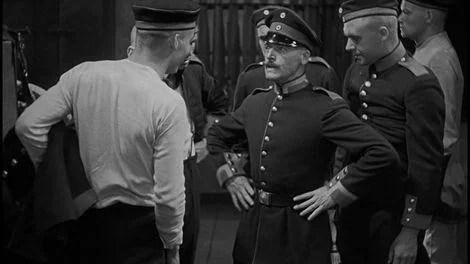
Himmelstoss’s disregard for the humanity of the soldiers he trains aligns with Machiavelli’s view that one should be willing to do whatever is necessary to attain and maintain power. He is hated by Paul and his friends, and they always talk behind his back, saying negative things about him and his past job. Himmelstoss represents a detestable and petty aspect of humanity during the war as his actions demonstrate Machiavelli’s belief that one must be willing to do whatever it takes to achieve success, regardless of the impact on others.
However, Machiavelli also believes that rulers must be cautious in their actions, as he notes that “if an injury has to be done to a man it should be so severe that his vengeance need not be feared.” Himmelstoss’s cruelty and disregard for the soldiers under his care led to Paul and his friends jumping him as a way to get revenge. His behavior indicates a lack of caution, as his actions ultimately led to his downfall.
In conclusion, Niccolo Machiavelli’s philosophy is evident in Himmelstoss’s actions as a soldier in Erich Maria Remarque’s All Quiet on the Western Front. Himmelstoss’s emphasis on the attainment and maintenance of power through deception, fear, and force aligns with Machiavelli’s philosophy in The Prince, which emphasizes the need for rulers to use any means necessary to maintain their power and control over their subjects. Both Himmelstoss and Machiavelli believe that the end justifies the means, and that rulers should not hesitate to resort to deceit, intimidation, and violence to achieve their goals.Regardless of the differences between Himmelstoss and Machiavelli, it’s clear that their ideas have had a significant influence on the way people think about power and politics. Today, many leaders and politicians still use tactics similar to those advocated by Himmelstoss and Machiavelli to achieve their goals and maintain their hold on power.
 Write Our World