
Erich Maria Remarque’s novel All Quiet on the Western Front follows young German soldiers and depicts the horrors of World War I. The violence and killing in the book are ceaseless, and existentialism can help evaluate the morality of such actions. Existentialism stresses individual freedom and existence, and dismisses universal moral codes. Jean Paul Sartre, an influential existentialist philosopher, believed existence comes before essence, and individuals create their own meaning in life through their actions. Using this approach, we can analyze the morality of violence and killing in All Quiet on the Western Front.
The book portrays the brutality of war in several scenes. The soldiers witness the unbearable suffering and death of their comrades, and they engage in this act of brutality themselves. Sartre’s view that existence is always particular and individual is applicable here. Each soldier is confronted with unique circumstances that shape their actions. When the soldiers attack Himmelstoss, for example, they are reacting to the specific abuse they have endured at his hands. Tjaden, in particular, relishes the idea of getting revenge on him since Himmelstoss humiliated him for wetting the bed. From an existentialist viewpoint, the beating that Tjaden and his comrades inflict on Himmelstoss could lead him to become the person he is meant to be.
Similarly, when Paul Baumer stabs the soldier who jumps into his shell hole, he is reacting to a specific threat to his life. From an existentialist perspective, the morality of these actions cannot be assessed solely based on universal moral codes. Existentialism recognizes the irreversibility of killing someone and the importance of human life and the impact of one’s actions on others. This means that one should make choices that align with their beliefs, while also respecting the rights and dignity of others.
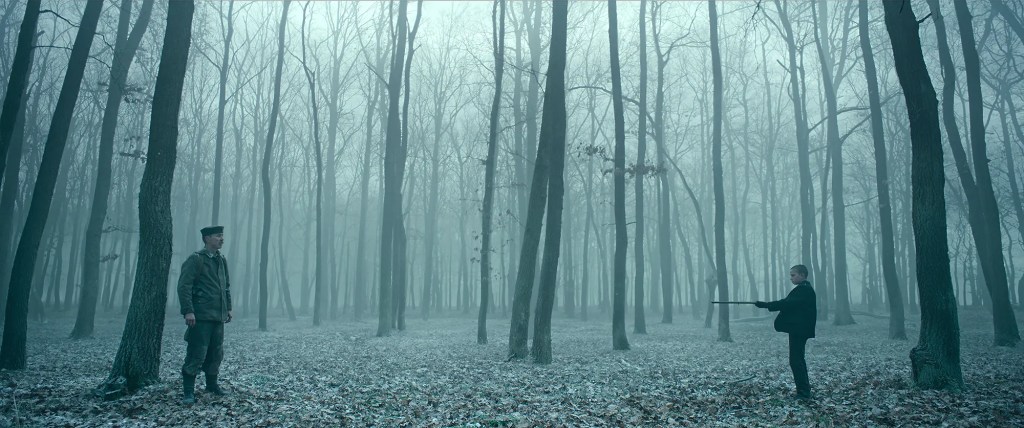
Sartre’s idea that “there is no reality except in action” is also relevant to assessing violence in All Quiet on the Western Front. The soldiers are thrown into a situation where they must act to survive, and their actions are shaped by the reality of war. This is demonstrated when Detering orders the soldiers to shoot at the enemy to prevent them from killing horses. He screams, “Shoot them! Shoot them, can’t you? Damn you again!” He is acting on his love for animals, but he is also reacting to the reality of war. From an existentialist perspective, the morality of these actions must be assessed in the context of the particular situation.
In both cases, the soldiers are acting in ways that do not align with their own beliefs and values, which is a result of the dehumanizing nature of war. At a certain point in the novel, when Paul kills someone with his own hands, we learn that killing has become normalized throughout the war. Even “Kat and Kropp and Muller have experienced it already, when they have hit someone; it happens to many, in hand-to-hand fighting especially.” They must weigh the value of their own lives against the lives of others and make choices that are often difficult and morally ambiguous.
In conclusion, existentialism provides a valuable framework for evaluating the morality of violence and killing in All Quiet on the Western Front. The book portrays the dehumanizing nature of war and the ways it forces individuals to act in ways that are not authentic to their true selves. At the same time, the novel emphasizes the significance of individual responsibility and ethical decision-making in the face of violence and death. Through an existentialist lens, the violence and killing depicted in the novel can be viewed as a result of the dehumanizing nature of war and the failure of individuals to live in accordance with their own authentic values and beliefs. This analysis can be useful in understanding the impact of war on individuals and society.
 Write Our World