Humans are no strangers to discrimination against one another. Time and time again, throughout history, we’ve pitted ourselves against one another, and for what? During World War II, it was the Japanese. During the Red Scares, the Russians. And during the war on terror? People from the Middle East.
Mass hysteria resulted in the abuse of the lives of the innocent, those who had nothing to do with the perpetrators in the news you’d see on the television. They were real people, with real lives, who were discriminated against for something for which they had little control over. They were treated like subhumans, as if their lives didn’t matter compared to the masses.
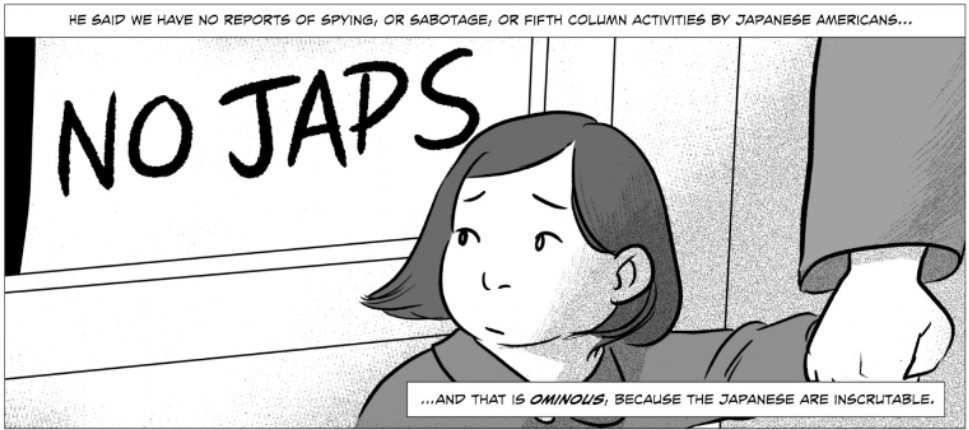
From page 25 of George Takei’s They Called Us Enemy
And that’s why George Takei’s novel They Called Us Enemy is important to the modern citizen. It provides insight into the wrongdoings of the concentration camps and the treatment of the Japanese during World War II; his story humanizes the people caught up in the conflict. We get to hear his side of the story, know how he and his family felt, and the conditions in which they had to endure. Although his story pertains to Japanese incarceration, the themes of discrimination for any other minority group rings the same way.
Japanese-Americans boarding a bus to an internment camp; image taken from the Library of Congress
Discrimination is not a thing of the past, and in fact, still happens regularly in the United States today. It may not always be on as grand of a scale as during World War II, but even as recent as the attacks on 9/11, mass hysteria following the incident led to the talk of rounding up those of Middle-Eastern descent, and incidents of racist crime against those groups rose. No, it’s not always the same demographic of people being targeted, but the fact that it occurs at all should be alarming. After all, America has had many eras of discrimination, and it’d be a shame to not be able to learn a thing or two from them.
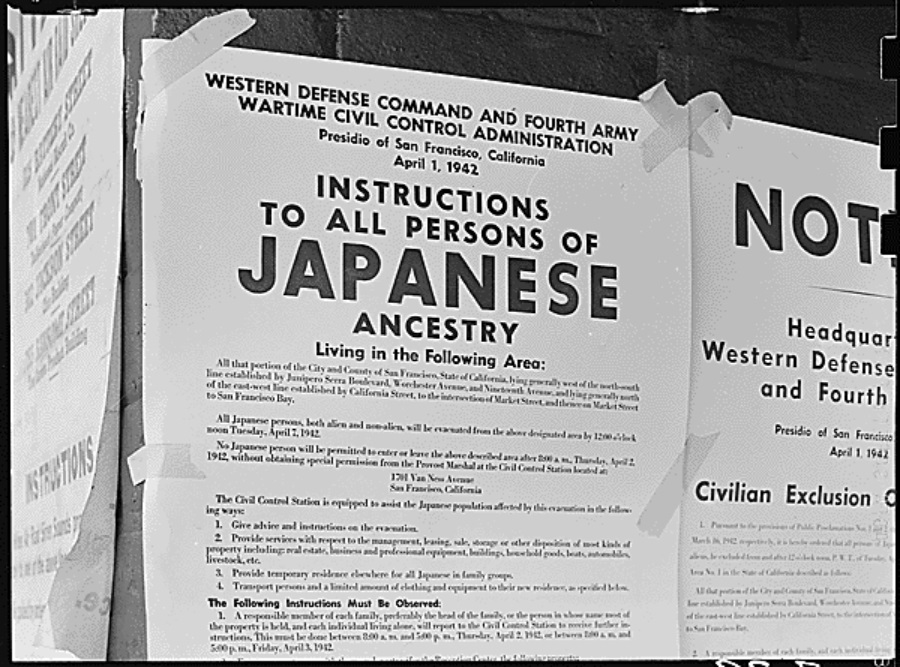
A poster issuing exclusion orders on Japanese-Americans. Image taken from the Densho Digital Repository.
Earlier in the year, I discovered a website called Densho Digital Repository, featuring first-hand accounts, documents, and objects of interest from many Japanese who had to endure this time during the war. One particular account by Gene Akutsu, provides a lot of insight on how we should handle the consequences of the Japanese concentration camps, or the Holocaust, or any other atrocities committed in the name of discrimination.
“Don’t forget. Don’t forget that this could happen to you, the Holocaust. And in the same manner, we should go out there and tell the people, make them remember, that this should never happen again. Because you as a minority, could be the next one.”
Gene Akutsu
Through education and learning from the stories of past, we can progress towards the next step in preventing another atrocity. History is doomed to repeat for those who fail to learn it, and for us to be able to better ourselves, for the sake of those we share this Earth with, we must learn to treat each other like humans—to not discriminate.

 Write Our World