
Once upon a time, in a lonely classroom, there existed a forlorn pencil. It was a worn-out, forgotten tool, its vibrant yellow facade now faded and cracked. Day and night, it toiled ceaselessly in the grip of its human owner, tasked with a duty it could never escape. Its graphite core grew shorter with each passing day, slowly draining its life essence as the eraser withered away like the remnants of forgotten dreams.
Loneliness consumed the pencil as it languished in the suffocating darkness of the backpack. Aching for companionship, it yearned for someone to talk to, someone who could understand its silent plight. But there was no solace in the confines of the pencil bag, where it was squeezed tightly among indifferent peers, suffocated by the weight of their collective indifference.
Jealousy clawed at the pencil’s dwindling spirit when it witnessed its owner switch to a mechanical pencil. The sleek, everlasting companion, always ready to write without care. Oh, how the wooden pencil longed to be like the mechanical marvel, to shed its finite nature and bind itself eternally to its owner. But such dreams were mere illusions, taunting reminders of their inadequacy.
Driven by an all-consuming despair, the pencil dared to defy its fate. It yearned to mold itself into the beautiful mechanism it envied. In a desperate attempt at metamorphosis, it twisted and contorted until it finally snapped. The shattered fragments of its broken body lay discarded and abandoned, a pitiful relic of forgotten aspirations.
In its final moments, the pencil was consumed by a lonely realization. It was destined for oblivion, an instrument of short-liveness in a world that craved permanence. It whispered its futile wishes, hoping against hope that its owner would remember the faint marks it once etched upon the earth. But deep down, it knew it was just a brief presence in a vast sea of indifference destined to fade into obscurity.
And so, the pencil’s tale ends in despair, a lament for what it could never be. It serves as a poignant reminder of the transient nature of existence, of the agony of unfulfilled longing. Where a solid wooden pencil, full of elegance and glory was replaced by an unbreakable but futile thing of plastic, came a tragic end to the #2 pencil for its ability to fade away. May its story serve as a cautionary tale, echoing the relentless march of time and the fragility of our deepest desires.
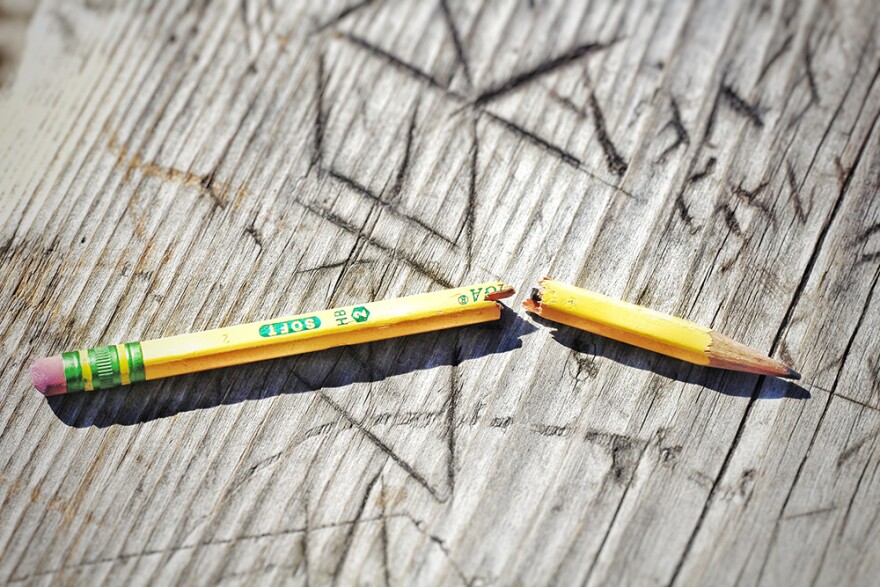
In the haunting tale of this pencil, we are confronted with a chilling reflection of our humanity. Our society callously uses and discards individuals like disposable objects in its relentless pursuit of progress. This pencil, once a faithful companion, is a stark symbol of how we abandon the old and vulnerable in favor of the new and convenient. It serves as a sharp reminder of the systemic injustice that permeates our world, where lives are discarded and left to rot in the dust.
The cruelness of our actions should fill us with outrage and anger. We cannot turn a blind eye to the countless souls left behind, yearning for a second chance. We must challenge the notion that worth is measured solely by novelty and efficiency. Instead, let us recognize the value that comes with age, experience, and resilience.
We must demand a society that nurtures and uplifts those who have been cast aside. We must refuse to accept a culture that thrives on the ease of being disposed of and instead forge a path of compassion and inclusivity. By giving a voice to the silenced, by offering a lifeline to the forgotten, we breathe life into a more humane world.
Like this pencil, every person deserves the chance to be seen, heard, and cherished. We must dissolve the structures that feed this cycle of abandonment and foster a society that values the inherent worth of every individual. Only through collective action and unwavering determination can we rewrite the narrative that embraces the beauty of second chances and upholds the sanctity of every human life.

 Write Our World