I hate the color pink.
Don’t get me wrong, pink is an ethereal color. It’s associated with universal love, sweet childhood, and the warmth of femininity. At first glance, pink is seen as a light, powdery color. Anyone would have a certain fondness for the color pink. However, every single thing has a flip side. To some, pink may be a horrific color. It could be associated with hatred, a lack of childhood development, and the consequences of femininity. It could also represent an association with a traumatic event. It all comes down to perspective and the willingness to understand different circumstances. Personally, I associate pink with the consequences of being a female.

Being entirely truthful, when I was a little girl, I adored the color pink. I admired Victoria’s Secret fashion shows, Hello Kitty, and Tinker Bell. My room walls were covered in this specific color, and every chance that I got, I would wear pink. Several other girls in my elementary classes would cherish the color pink as well. Everyone had a favorite color, and mine was pink. Pink, to me, represented innocence and clarity.
Soon enough, I was exposed to the early stages of womanhood. Students became more aware of their environment and physical changes around them. Within my personal experiences, the boys in my classroom would take more interest in inappropriate jokes, and the girls would stress over both natural and emotional growth. Once, during class, one of my male classmates asked if I was wearing a bra. I sat there, dazed and embarrassed at the sudden question. In an instant, I felt insecure and wanted to hide in a hole. At the time, I did not think much of it. Thinking over the situation now, I realize how strange that question was. Why was my male classmate looking at me in that way? Why did I, as a fourth grader, have to feel so uncomfortable at such an early age?
In Middle School, I was still oblivious to the dangers of the environment that came with being female, despite having more exposure in the real world.
Knowing that high school was coming around the corner, my friends and I would sketch out prom dresses and fantasize about driving cars. I’ve always wanted my car to be pink.
During class, pastel pink was still my favorite, and I would try to incorporate this color into my Social Studies notes at all times. Social Studies was always my favorite class, but only once did I not feel the typical love that I had for this class.
I was talking to a group of friends, when we suddenly got into the topic of Volleyball. I had this one friend who was very passionate about this sport. One of my female friends was joking around about playing against him one day.
However, he blatantly stated afterwards, “Women are weak.”
At once, I was filled with shock. I felt emotions that I could never fully explain. I felt sad and much less confident in myself when it came to doing tasks that were labelled as “masculine”. As a sixth grader, I didn’t know how to respond, so I just laughed it off.
Eventually, days blurred together and time became fuzzy. It was the beginning of eighth grade, and everything took a drastic turn for me.
I quickly understood how unsafe or unfair specific things were against women. I was able to observe some of the terrible things happening to women my age. At the ripe age of 13, females were being groped at dances, sexually assaulted by classmates, and catcalled outside and within school environments. Several boys would laugh it off, saying that we were being too over dramatic.

I told these stories in order to show how that even at a younger age, I was objectified and blinded by the stereotypes of being a woman. Everyone is their own person, and no one ever has to fit into these unrealistic standards of womanhood. It’s okay to be aggressive and have a strong motive for something that you are passionate about. Being a woman is subjective and does not or ever have to be categorized.
Now that I am in high school, I am much more aware of larger-scale situations that are occurring to women all over the globe. I know how to differentiate between what’s right and wrong. My childhood fantasies are crushed, knowing that I could potentially get kidnapped for displaying any signs of femininity, as, “women are weak and fragile”. I can’t wear the prom dresses that I envisioned with my friends because they may be too revealing and could possibly draw the attention of an aggressor. I now don’t want a pink car because I realize that I may indicate myself as a young female and become an immediate target of a human predator, since young women are “easy targets”. Every time I leave the house, I’m always mindful of my surroundings, checking for suspicious activity and/or potential threats who may be targeting women. Although this is common sense, anyone has the right to leave their house, knowing that they are secure and protected at all times.
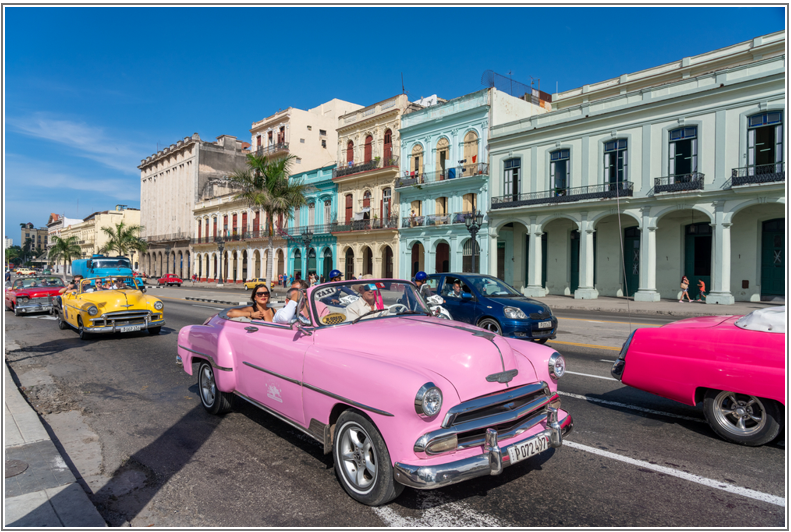
Being real, pink is beautiful. There is nothing wrong with liking this gorgeous color. However, it has been associated with femininity since the 1940s. Typically, due to the lack of opportunities and equality in society when it came to gender, women were seen as “frail and fragile”. Traditions were passed on, and pink is still the color stereotyped towards women. As several people are aware, pink is commonly associated with softness and sensitivity. The color pink and women have become so interconnected and intertwined, to the point where even a pigment of color has been related to perceive the “characteristics of a woman”. The problem is that the depictions of the color pink has too strong of a relationship with being a woman.
If pink has an indirect association with the stereotypical female mold, then I strongly dislike the color pink. Women should support other women, but the creation of fighting for feminism and basic rights is irrational. Feminism is the idea of fighting for equal rights between men and women. It’s a movement that looks to uplift women as a whole. However, why was the female gender not considered equal in the first place? Why did the whole idea of feminism and fighting for basic rights need to become a thing, when equality could and should have already existed previously? All throughout history, women have fought for educational rights, fought for rights in voting, fought for higher positions in power, and fought for safer spaces to just be. The fact that feminism had to be created shows how unfair and unjust different systems and society, as a whole, has been to women. Several inventions by women have been credited to men. Several workspaces are not fair and righteous towards women. Several laws and restrictions have been targeted towards women.
However, even spiraling down can lead to a sudden surge upwards. We, as women, can survive our challenges by standing up for ourselves and sticking to what we know it right. This can be done by doing something joyful, or by making a large impact on other women. Remember: Restrictions hold back, but they can never render others to a complete halt. Pink may not be my favorite color, but . .
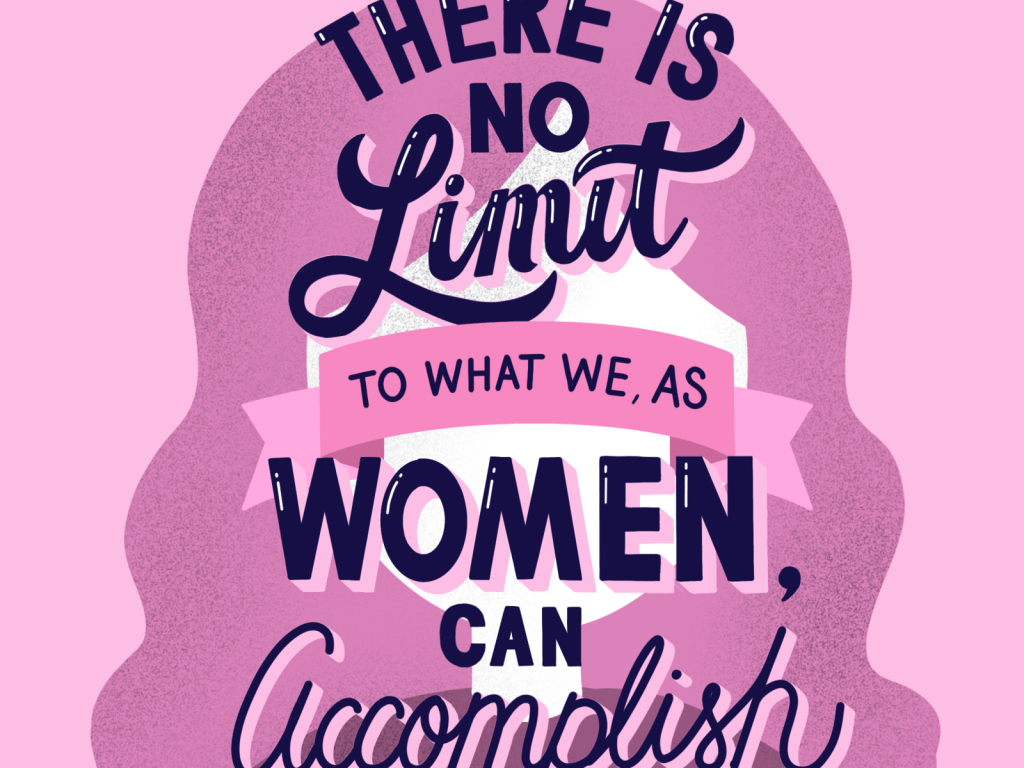
“There is no limit to what we, as women, can accomplish”
-Michelle Obama
 Write Our World