The most humane way to kill most beings would be a clean, painless death. A painless kill could be poison or a quick shot to the head, but in Shakespeare’s Othello, Act IV Scene I, Iago suggests to “Do it not with poison. Strangle her in her bed, even the bed she hath contaminated.” But why would Iago suggest killing Desdemona this way? Is it because he’s sick in the head and wants everyone to suffer more? Possibly, but considering that this is a play, Shakespeare likely chose this to look more dramatic and entertaining to the audience. Which makes me wonder, what makes tragedy so appealing to people?
Throughout history, humanity has created a plethora of tragic stories. For example, there’s “Romeo and Juliet” written by Shakespeare, the Greek myth of “Orpheus and Eurydice” and many more. Both are famous for the characters’s undying love and loyalty to one another while meeting a devastating end. Perhaps these genres of stories are perceived so well because people can relate to them. According to Cynthia Vynney, “Consuming sad stories enables us to experience sadness without anxiety”. When we read or watch a sad fictional story, the pain only lasts a little while, unlike the grief we feel when a real-life event happens to us. This enables us to feel emotions without having real-life problems troubling us. Sad stories give us a sense of security and an appreciation for the things we have.
Similar to how sad stories can connect people to their feelings, the Mojave phone booth illustrates connection well. The phone booth is famous for connecting thousands of people through phone calls, where tourists and travelers would go just to have anonymous conversations to talk about anything. But as the Phone Booth became increasingly popular, it started to have negative repercussions on the surrounding wildlife. This is similar to how we humans consume tragic stories because it may connect us with our emotions and give us catharsis, but it won’t relieve any of the problems we have in real life.
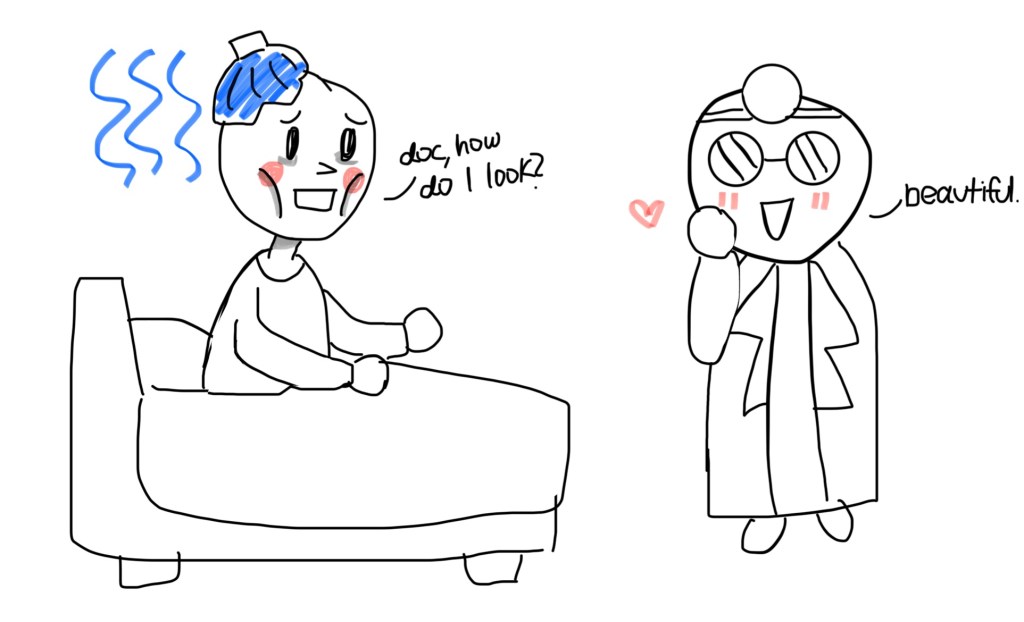
Nonetheless, there are other reasons people feel the need to be tragic, especially when a tragedy becomes a beauty standard. According to the reading Honor Killings, “In the 1st century AD, chastity, virginity, and the “good behavior” of women were highly prized across Europe.” which applies to the Victorian era, where women had to meet more and more standards because people adored how sickly women would look if they were to catch Tuberculosis. During this time, victims were described as “becoming pale and thin before finally dying of what was then known as consumption.” To many people during that time, women who caught Tuberculosis appeared more beautiful since the sickness enhanced century-old beauty standards, like pale skin and thin bodies. So, to conform to these new beauty standards, women would wear makeup and change their appearance to look ill, which would only idolize sickness and make it seem appealing.
Although glamorizing unfortunate things like Tuberculosis can get a little out of hand, we love sad stories because they help us with our emotions and inspire us to confront our own problems. All in All, sad stories can be more therapeutic than we think.
 Write Our World