When I was reading “They Called Us Enemy” I had a couple thoughts come to mind. While I believe the main purpose of the novel was to raise awareness of the struggle and resilience of those put in the internment camps, there are also underlying themes that all intertwine and make it such a good graphic novel.
A big portion of George’s story is grappling with the question “How can we love this country after everything they’ve done to us?” As George Takei gets older, he develops a deeper understanding of the whole situation. His father, despite holding a grudge against the people who imprisoned him, still believed in the promise of democracy. He recognized that “people are fallible human beings”, something that George would come to understand as he matured. His journey is signified by forgiveness and appreciation for America, despite the injustices given to his family.
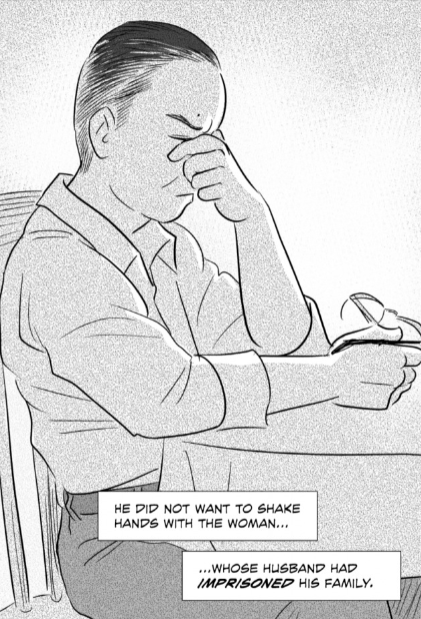
George Takei’s story acknowledges the wrongdoings of America and the injustices he faced but also highlights the greatness of the country. By doing so, he honors the resilience of those who faced hardships but also creates the path to forgiveness. It allows the victims of the internment camps to acknowledge their suffering while also embracing the possibility of change.
I think that forgiveness is a really important part of life and that we can’t live life without forgiveness. Holding grudges is just being kept in the past, and by forgiving, we’re allowed to move forward. It frees us from the burdens of resentment and bitterness that would otherwise consume our lives.
The path of forgiveness is not easy. It requires courage and empathy to look beyond our own resentment and George’s story is just one out of a million. He shows that even though forgiving is challenging, it’s even more rewarding. When we forgive, it shows that we healed. It shows that we understand our pain and suffering and are willing to look past it. We are freed from our burden and we slowly pave the way for a more compassionate society.
 Write Our World