Racial segregation is not as common as it was 20 or 30 years ago but it still affects from the past have still affected some people today. An example of the past haunting the present could be the Japanese Internment Camps. The Japanese Internment camps after the Pearl Harbor incident Hawaii have still haunted many Japanese Americans. Over 100,000 Japanese Americans were forced to leave their homes to be transported to the desert surrounded by barbed wire where they were trapped for about 3 years.
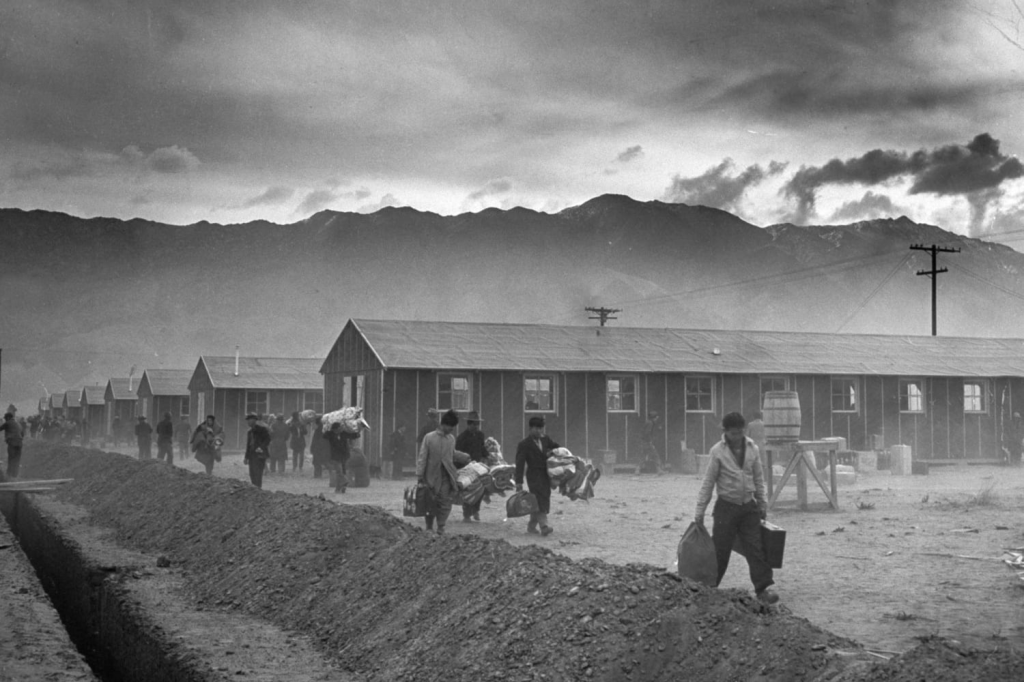
The creator of the Play Mountain, Isamu Noguchi was also a Japanese American who has been trapped in a Internment camps after he had wanted to only volunteer his services at the camp by teaching ceramics and Japanese paintings but was mistaken Ed as someone apart of the camp. The camp members thought of him as a traitor and often distanced themselves from him. This was an example of the American government not caring of your origin or where you came from, but if you were purely the blood of your origin was who you were. From the First Person view of the book “They called us enemy” many learn about the tragic experience of racial segregation many had from what their people did to the Americans and how they were treated with disrespect and revoked of many of their rights. This included their right of due process, the right to vote, and freedom of religion. Many who were in these camps lost their homes, careers, lives, culture, etc. Even after getting out of internment camps, it was extremely hard to obtain jobs and housing and many had to work their way up again. Many Japanese Americans were treated with discrimination and were still not allowed in some places. The after affects of the internment camps affected the people’s health that included psychological stress, traumatic stress, as well as cardiovascular disease was more common.
 Write Our World