While reading They Called Us Enemy, there was a powerful message being pushed in the last half of it: that the American democracy is a people’s democracy, and is a great tool for fighting against injustice–and that we should fight against injustice. When going through these parts of the comic, I had a lot of thoughts going through my mind such as gratitude for my democracy, and also feelings that right now it is being manipulated by corrupt politicians. A lot of what I thought came back to serious and horrific events happening and have happened in this world, and they connect to even bigger ideas about courage, justice, and freedom.
They Called Us Enemy is a story in comic style about a Japanese-American family being sent to internment camps with thousands of other Japanese-American families. It shows the injustice and even inhumane treatment given to them, how they would persevere through it together as a community, and how they fought for their rights to stay as American citizens and even have justice served when the American government finally apologized to them and gave each of them a check. Later on, it centers more around the main character, George, who grows up fighting for more equality, and sharing his story with everyone. Some elements of this story (although the situation is substantially different) remind me of the genocide the Israeli government (horrifically many of the citizens support it as well) is committing in Palestine.

The Palestinian genocide. An ethnic cleansing that has been led up for the past 76 years–starting in 1947 when the UN recommended that Palestine be separated into Palestine and Israel, and in 1948 when Britain gave up its mandate and left the two behind. 1948, the same year that the Nakba (meaning “catastrophe” in Arabic) occurred, where Israeli Zionists committed an ethnic cleansing of Palestinians (yes, it’s happened before), causing 750,000 Palestinians to evacuate and 17,000 to die. From then on more massacres were committed on Palestinians until 2023, Oct. 7th, when Hamas, a militant group in Palestine attacked Israel from the Gaza Strip, killing about 1,200 Israelis and taking 253 hostages, with about 130 remaining at this moment. Israel responded with intense military operations that continue until now: 1.9 million Palestinians were displaced (over 85% of the population), more than 35,000 killed–half of them children (deaths exclude the many more that are missing or under rubble), around 5,000 taken hostage (many who were released were in terrible condition), using famine as a tool against them, controlling and blocking clean water, blocking electricity, blocking aid, the relentless bombing of Gaza, the violent attacks and discrimination in the West Bank, all functioning hospitals bombed or shut down, and just too much more. Too much more has been excused by the Israeli government’s favorite overused scapegoat, Hamas (there is no Hamas in the West Bank). By the way, scapegoats are key tools in genocide. And yes, no innocent person deserves to be killed or taken hostage, but some people will see Israeli lives as more important than Palestinians, and will also think that this whole problem started on October 7th because of Hamas. It did not, and Hamas was not. I’ve already stated that this bloodshed from the Israeli government has been ongoing since 1948, and when Hamas attacked, the Israeli government took that as the perfect scapegoat and opportunity to commit genocide. When something happens, it’s important to ask “Why was that done?” and look at the history, more than the surface-level history being shown to you. Another tool they use is the term ‘anti-semitism’ against those who oppose the genocide, and the actions of Israel and Zionists. Something needs to be made very clear, anti-Zionism does not equate to anti-semitism. Anti-Zionism is being against a violent ideology. Anti-semitism is prejudice or hatred against Jews. The genocide of Palestinians by Israel should not be defended in their name nor should people see them, or accuse them as a cause for it. The people who do contribute to the genocide are Israel and its government (of course), Zionists, countries who don’t recognize Palestine as a state (especially America), companies with ties to Israel, those who suppress our freedom of speech of talking about what’s happening in Palestine, or peaceful protests, and those who choose to stay silent or “neutral”. Silence and neutrality from enough people allow for the genocide to continue–it’s a strong political statement contrary to what some people think. When someone is being bullied, especially violently–and their stuff is being stolen, are you going to do something about it and call for help, or will you be a bystander who does and says nothing because that’s the “victim’s own problem” or because maybe there’s “another side to the story and the bully(s) have a reason”. And now after many years of intense occupation (because this situation started way before October 7th), the situation in Gaza is very urgent as Rafah, the supposed only “safe zone” in Gaza claimed by Israel is being attacked. In this very urgent time, I want to emphasize the three ideas I mentioned above: courage, justice, and freedom.
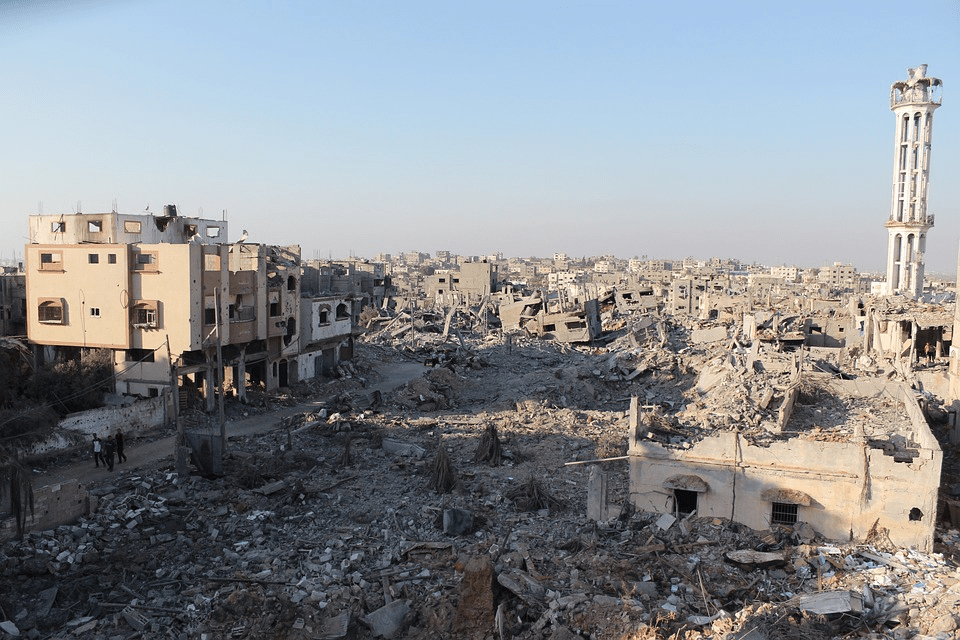
Image by hosny salah from Pixabay
About courage, Palestinians have taught me a lot about it–and so did this comic. And it is what led me to finally write this, despite seeing how much freedom of speech has been suppressed for pro-Palestinians–teachers being fired, police brutality against peaceful pro-Palesitian protests, and encampments on college grounds. There is a part in They Called Us Enemy where Japanese Americans were given mandatory questionnaires that test their loyalty as American citizens. But there were two off-putting questions, questions 27 and 28. Question 27 asked if they were willing to serve in the Armed Forces no matter where they were. Question 28 asks for full allegiance to the United States and to forswear any allegiance they held to the Japanese emperor or any foreign organization. George explains that question 27 wanted them “to pledge our lives for a country that had upended our families and put us behind barbed-wire fences,” and that question 28 “rested on a false premise: that we all had a racial allegiance to the emperor of Japan,” (Takei & Becker, 2020). Then George’s parents courageously answered ‘no’ for both questions, earning them the label of ‘No-Nos’. They stuck to what was right in their hearts, despite knowing the consequences they could face for their decision. Although I believe most Palestinians are more courageous than we could imagine, I wanted to talk about one particular, and popular journalist who’s been showing and talking about the situations happening in Palestine: Bisan Owda. She is a wonderful storyteller who loves filmmaking, Harry Potter (which is why she calls herself ‘wizard_bisan1’ on Instagram), and even more, Palestine. Bisan has been shedding light on the horrors of the genocide, and also the many crafty ways that Palestinians have, as a community been trying to get through some of their struggles like starvation (like make-shift potato chips early in the genocide). These figures are just some examples that inspire me to be courageous a little more each day. To use my voice to talk for justice and truth, and to hopefully inspire others to follow–which brings me to my next point.

Photo by Dmitrii Eliuseev on Unsplash
Justice is a thing constantly lacking in the world–and it’s severely lacking in Palestine. At this point, there are lots of people around the world who support Palestine, and 143 out of 193 UN member states recognize Palestine as a state. But in the UN Security Council, there is one country that voted against a solution to recognize Palestine as a state: The United States. It’s also the biggest supporter of Israel, giving Israel about $300 billion since its creation, whos been using chunks of those billions in its genocide against Palestinians. For the most part, this is horrible because it aids in the ethnic cleansing of a people–but it’s also highly embarrassing that our government has been giving billions of dollars for a horrendous and inhumane cause when they could’ve been using that money to help their own people with better healthcare (which everyone complains about), education, living conditions, and more. Anyone should be outraged that their government is prioritizing genocide of another country over their own needs. I find it hard to be patriotic to the United States for this reason and many other ones. How could I love a country that’s so unjust to others (my parents are from Afghanistan, which has faced injustice by the U.S.)? But reading They Called Us Enemy and seeing how George loves America and its democracy but still fights for the justice of his people and others, I realized something. Patriotism doesn’t mean blindly loving your country, being ignorant of its faults, and falling for all its propaganda. It means you love your country, and because of that, you want it to improve. You want it to live up to its good values–and in the case of America, we should want it to be a place of liberty and justice not just for us, but for all. All who we have and are wronging, just like how in They Called Us Enemy the American government finally gave a formal apology to the Japanese Americans who were placed in internment camps.

My last value, freedom, is something that goes hand in hand with justice, for freedom should be given in a way that is just for all, and cannot come unless those with courage fight for it. Just like how lawyer Wayne Collins challenged order 9066 to help Japanese-Americans win back their U.S. citizenship–all the way to the Supreme Court–and the many Japanese-Americans who fought for it. So I want to end by asking any of you reading this to educate yourselves on what’s happening in the world and to never stop talking about or fighting against the oppression of humans. Though there are many other countries facing oppression around the world–like Sudan and Congo, I wanted to put the spotlight on Palestine–the country whose flag has the colors of a watermelon– and its people because of the urgency of their situation. I want people to vouch for Palestine’s right to be recognized as a free state, free for its people to follow their dreams and not live in fear, free from its oppressors. I want a free Palestine.
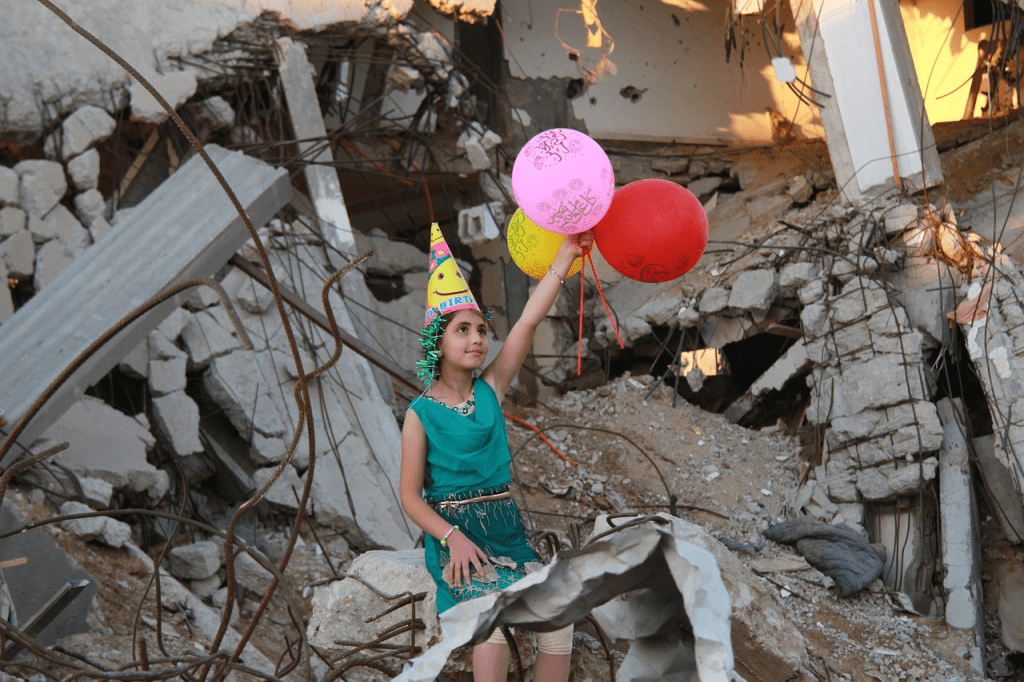
Image by hosny salah from Pixabay
 Write Our World